
Does Elk Calling Really Work?
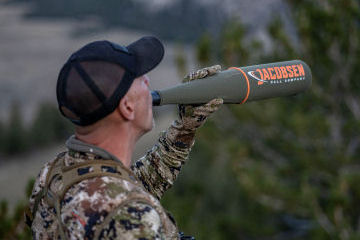

As we’re preparing to leave for our first elk hunt of the season next week, I have a lot on my mind – travel prep, gear lists, tactics for pre-rut hunting during a full moon, etc. But the one thought that is dominating my focus right now is hearing that first elk bugle of the season!
There is something absolutely magical about the bugle of a bull elk. It’s what lures me back to the mountains every September, and it’s what keeps me thinking about September during the other 11 months of the year.

Earlier this month, we concluded two more sold-out “Elk Camp” events, where we spent 6 days immersed in elk calling and elk hunting tactics with 48 elk hunters from just about every corner of the continent. And almost all of them were there with the same goal: to become more confident in using elk calls to bring elk in close.
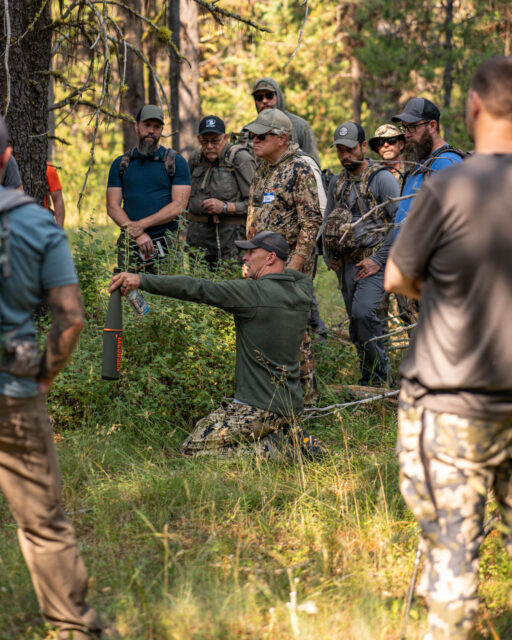 I receive several emails and messages throughout the year related to elk hunting, but over the past 3 months (including at the “Elk Camp” events), I would say the Top 3 questions I have received have been:
- How do I figure out what the elk are saying, and how should I respond in each situation?
- When should I be aggressive and when should I be timid when it comes to calling?
- Is it best to use cow calls or bugles, and how do I decide in different scenarios?
When it comes to elk hunting, I would say that calling is probably the one area where the greatest gap exists between confidence and insecurity. There are so many variables and factors in calling elk that it really can become overwhelming.
How do I learn to use calls?
What sounds do I need to practice?
When do I use each sound?
How much should I bugle?
Should I just cow call instead of bugling?
What did the bull just say to me, and should I respond aggressively or timidly?
Why is the bull bugling aggressively, but running away?
Why did that bull just sneak in on me?
Why is he hanging up at 100 yards?
What call should I use to break a herd bull loose?
And on and on and on goes the questions – and the doubts…
The confusion that often comes from this one topic can be enough to cloud not only our understanding, but also our hope of being successful. Fortunately, it doesn’t have to be confusing or complicated. And there is no need to worry that your calling abilities or understanding of elk language are going to prevent you from being successful.
Many of you probably know that I have a background in engineering. You probably also know that it took me a long time to learn to be successful as an elk hunter (9 years before I filled my first elk tag). Coincidently, once I applied “engineering” to elk hunting, my success rates increased exponentially. And that thinking also made my approach to calling elk much simpler.
Engineering taught me to break down processes to their most basic form – to break them down into individual components and focus on the efficiency of each part, and then put them back together to create a simple, efficient system.
I have stood in that vast wilderness of elk calling doubt in the past, and I’ve felt the overwhelming despair of not knowing what to do, and being absolutely frustrated when I couldn’t get the elk to do what I wanted them to do. I knew my calling sounded realistic enough, but something else was missing. So, how did I overcome it? I simplified my approach…
Through many years of trial and error, here is what I have concluded:
There are two trains of thought when it comes to calling elk. First, you can try to analyze every sound an elk makes and attempt to define it, and then assign a “language” to it, and finally try to figure out what to do to make the best response. However, this approach often involves allowing the elk to control the conversation, and all of our actions become a “best-guess” reaction to what the elk says or does. You can imagine the plethora of combinations of elk sounds and actions you would need to learn, memorize, and then act upon in the heat of the moment. That alone can be enough to rob you of confidence.
The other train of thought is much simpler. You could completely ignore what the elk is saying, and simply learn how to control the situation with your communication, regardless of what the elk says. But would that really work? Honestly, yes. In fact, I’ve found that the more I simplify my elk calling strategy, the more confident I become in my calling abilities, and the more success I create.
Looking back at those Top 3 elk calling questions, the real question now becomes, “What do I say to the elk to control the conversation?” And thanks to the natural wiring of a bull elk’s brain, that answer is pretty simple as well…
 It really boils down to this: bull elk are wired to respond to two primary vocal triggers – the desire to breed (cow calls) or the desire to fight (bugles). It’s part of their DNA, and their uncontrolled response to those two stimulants is what allows elk populations to propagate annually – and creates the spectacle we have come to know as the elk rut.
Outside of those two factors, there really isn’t any other reason a bull elk will come into your calling. And I would say that almost every elk calling tactic, sound, or strategy ultimately falls into one of those two categories anyway. So, it becomes important, even critical, to funnel your communication through one of those two emotional triggers.
A while back, someone messaged me and asked if I could create a flow diagram for the process I go through as I determine how to approach different calling situations. I actually have one already created, and it’s really simple. In fact, I approach every single calling setup the exact same way, and it doesn’t matter if it’s the pre-rut or the peak rut. It also doesn’t matter if it’s a young bull or a mature bull. The genetic wiring is hard-coded into all male elk…
My goal is the same regardless of the day and regardless of the size of the elk – I want to call in a bull elk. And to do that, I just need to trigger a natural emotional response.
Since there are only two emotional triggers I can use, my choices are simple – cow call to make him think there is a cow that needs to be bred, or bugle to make him think there is a bull that he needs to fight.
This is where the real psychology of elk calling comes in – it’s not what you say (a cow call or a bugle) that will elicit the response from a bull elk – it’s how you say it.
If you want a bull to get excited about a lonely cow that is ready to be bred, you need to play the part. Communicate loneliness and desperation to the bull. That doesn’t mean you have to go all “hyper-hot” and cause thumb cramps from rapid-action on a Hoochie Mama. But you do need to trigger his emotions.
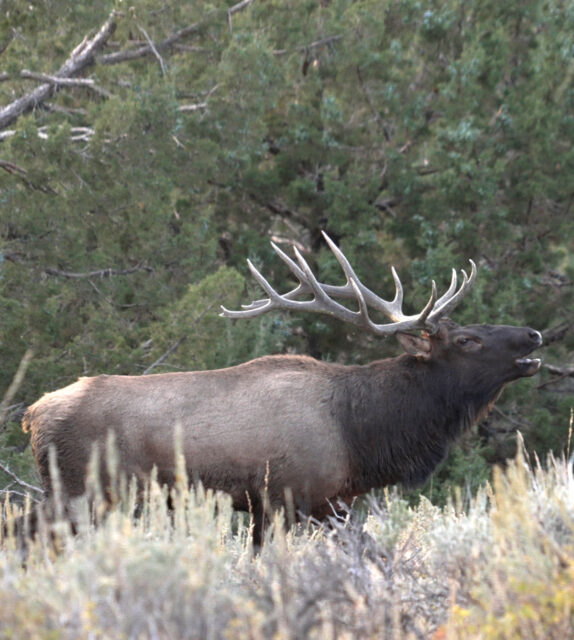
Every time he bugles, immediately talk back to him with cow calls. Tell him you are interested in him, and let him know you are talking to him. Don’t wait 60 seconds to respond. As soon as he bugles, cow call right back. Invite him to come hang out with you. Be desperate for his companionship. And put that emotion into your cow calls to communicate what you want the bull to hear.
Similarly, when it comes to starting a fight, you need to deliver a message that will get the bull fighting mad. So, what do you need to say? Better yet, how do you need to say it? With emotion…
If you use your best Marty McFly bugle and timidly say, “Gee Biff, one of these days I’m going to get angry and you’ll be sorry”, the bull is going to laugh at you and likely walk away. You’re not serious, and you’re not a worthy challenger. And you surely didn’t trip any of the triggers that would make a bull elk lose his mind to protect his cows or to fight to establish his dominance.
However, if you scream venom and fire back at the bull, and insult him to the point that every other elk in the valley is laughing at him, he’s going to be more apt to understand that you are challenging him to a fight. Using emotion in my calling to start a fight with a bull elk has been insanely effective, and has become the foundation for just about every calling scenario I find myself in.
To summarize this concept, I don’t feel it’s necessary to worry so much about what an elk is saying. If you want to have any chance of calling him in, you are going to be much better off taking control of the conversation and using your calling to trigger one of his two emotional reactions – either his desire to breed or his desire to fight.
Sure, it’s absolutely possible to call in a timid, call-shy bull with a blind calling setup where you just sit for 45 minutes and go through a full-range of herd sounds to make a bull think there is a herd of elk hanging out there. But that same bull has a bottled-up emotional response just waiting to be triggered.
And there will always be some bulls that just don’t have the demeanor of a fighter, and no amount of insulting is going to get him to break loose. As with anything, a “one-size-fits-all” approach isn’t going to work on every elk, every time. But I’ve found this method of triggering a bull’s natural response mechanism to work in multiple situations, and throughout multiple periods of the rut.
Plus, when a bull comes into your calls because of an emotional response, he often becomes a much easier target. His guard is down, and emotions – not logic – are controlling his actions. With logic, he’ll likely be coming in slowly and using his senses to protect him. But when his natural desires take control, and he is thinking only about breeding or fighting, it can be an incredible thrill!
There are other factors you might also need to implement to make your calling strategy even more effective – things like getting close before you set up, establishing a good setup before you even start your calling sequence, or adding raking into your calling routine. But if you simplify your calling strategy and just focus on why an elk would come to your calls in the first place, it’s going to give you the confidence you need to engage, and quite possibly, the results you need to get a shot.

*********************
IF YOU’RE INTERESTED IN LEARNING MORE ABOUT DETAILED TACTICS, STRATEGIES, AND INFORMATION RELATED TO CONSISTENTLY FILLING YOUR ELK TAG EACH SEASON, BE SURE TO CHECK OUT
THE UNIVERSITY OF ELK HUNTING
Online Course
(WHICH IS NOW PART OF THE OUTDOORCLASS FAMILY).
{CLICK HERE}
TO SIGN UP FOR “THE UNIVERSITY OF ELK HUNTING” Online Course
(and the Full Outdoor Class library)
AND USE THE DISCOUNT CODE ‘ELK10115’ TO SAVE!
*********************